

77 posts
_0.png&w=3840&q=75)
Cleaning Lab Glassware: Removing Stubborn Residue
Cleaning laboratory glassware properly is essential for accurate, safe, and repeatable lab work. This guide explains how to remove stubborn residue from beakers, flasks, bottles, volumetric glassware, and other lab glassware, including grease, dried salts, biological residue, stains, and burnt deposits. It also covers safe cleaning methods, common mistakes, drying and storage tips, and when damaged glassware should be replaced.
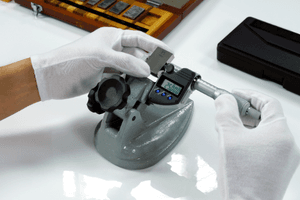
How to Calibrate Your Pipettes to ISO 8655 Standards
Pipette calibration helps laboratories confirm that liquid handling results remain accurate, repeatable, and traceable. This guide explains how pipettes are calibrated to ISO 8655 standards, including gravimetric testing, environmental control, correct tip selection, volume testing, calibration records, and common mistakes to avoid. It also covers when to use in-house calibration and when an external calibration service may be more suitable.
Molarity and Dilution Calculator
A free molarity and dilution calculator covering four essential lab calculations: C1V1=C2V2 dilution (solve for any unknown), molarity from mass, mass from molarity, and serial dilution table generation. Includes worked examples, a concentration units guide and step-by-step preparation instructions for every result.
Buffer Preparation Calculator
Free online buffer preparation calculator. Select your buffer system, enter target pH, concentration and volume, and get an exact lab-ready recipe with reagent masses and step-by-step instructions. Covers PBS, Tris-HCl, sodium phosphate, acetate, HEPES, MOPS and more.
_0.png&w=3840&q=75)
Laboratory Balance Guide: Analytical Balance Vs Precision Balance Vs Top-Pan Balance
Laboratory balances are essential weighing instruments used to measure samples, reagents, powders, chemicals and materials with accuracy and consistency. They are commonly used in research, education, quality control, pharmaceutical testing, food testing, industrial laboratories and general scientific workflows.
_0.png&w=3840&q=75)
pH Meter Guide: How pH Meters Work, Calibration, Electrode Types And How To Choose One
pH meters are essential laboratory instruments used to measure how acidic or alkaline a liquid sample is. They are widely used in research, water testing, food and beverage analysis, education, environmental monitoring, quality control and manufacturing where accurate and repeatable pH measurement is required.
_0.png&w=3840&q=75)
Magnetic Stirrer and Hot Plate Stirrer Guide: Uses, Types and How to Choose the Right One
Magnetic stirrers and hot plate stirrers are essential laboratory instruments used for consistent mixing, solution preparation and controlled heating. They are commonly used with beakers, flasks and bottles to dissolve solids, prepare reagents, maintain suspensions and support routine sample preparation across research, education, quality control and industrial laboratories.

Benefits of Purchasing from LabFriend
Purchasing from LabFriend offers laboratories a practical mix of product range, brand choice, online convenience, and procurement support. This article explains the key benefits of buying from LabFriend, from access to a large multi-brand catalogue and flexible payment options to manufacturer-backed warranty and helpful educational content.

Top 5 Brands for Borosilicate Glass Beakers
Choosing the right borosilicate glass beaker brand can affect durability, chemical resistance, thermal performance, and day-to-day usability in the laboratory. This guide highlights five leading brands for borosilicate glass beakers, DURAN, PYREX, Scherf, ISOLAB, and LLG Labware, and explains what makes each one a strong choice for different laboratory needs.

Top 5 Pipette Brands for Laboratories
Choosing the right pipette brand can improve accuracy, comfort, and consistency in daily laboratory work. This guide highlights five leading pipette brands for laboratories, Eppendorf, BRAND, Gilson, Sartorius, and Thermo Scientific, and explains what makes each one a strong choice for different liquid handling workflows.
_0.png&w=3840&q=75)
What is a Graduated Cylinder? How to Read and Choose One
A graduated cylinder is a essential laboratory tool for measuring liquid volumes accurately. This guide explains what it is, how to read the meniscus correctly, the difference between Class A and Class B, glass vs plastic options, and how to choose the right size for your application.
_0.png&w=3840&q=75)
What is a Watch Glass? Laboratory Uses and Applications
Discover what a laboratory watch glass is, its 6 key uses in chemistry and biology, the different types available, and how to choose the right size for your lab. A complete guide by.
_0.png&w=3840&q=75)
Best Water Baths for Research Labs
Choosing the best water bath for a research lab involves more than comparing tank size or maximum temperature. This guide explains what to look for in a laboratory water bath, including temperature range, stability, uniformity, capacity, evaporation control, and accessories, while highlighting current LabFriend options from PolyScience, Thermo Scientific, and Grant Instruments.
_0.png&w=3840&q=75)
How to Select the Right Lab Refrigerator & Freezer for Your Laboratory
Choosing the right lab refrigerator or freezer is essential for protecting samples, maintaining temperature stability, and supporting reliable laboratory workflows. This guide explains how to compare refrigerated and frozen storage options based on application, temperature range, capacity, monitoring features, energy use, and long-term operating needs. It is designed to help laboratories make a more informed cold storage decision for reagents, biological samples, chemicals, and other temperature-sensitive materials.
_0.png&w=3840&q=75)
Erlenmeyer Flask Guide: Uses, Sizes & How to Choose the Right One for Your Lab
This guide explains what an Erlenmeyer flask is, its key uses across chemistry and microbiology, and how to select the right size and material for your application. It covers practical considerations such as capacity, chemical resistance, and autoclavability, while comparing it to other common laboratory glassware. The article also highlights common mistakes to avoid and provides guidance on choosing reliable options from trusted laboratory brands.
_0.png&w=3840&q=75)
How to Choose a pH Meter for the Lab
pH meters are essential laboratory instruments used to measure the acidity and alkalinity of liquid samples across chemistry, life science, environmental, food, water, and pharmaceutical workflows. This guide explains how to choose the right pH meter for the lab by comparing portable, benchtop, and multiparameter systems, while also covering key selection factors such as accuracy, sample type, calibration, and electrode compatibility.