

Share :
5 Smart Tips for Getting the Most Out of Your Analytical Instruments
Updated On 05/21/2025

Introduction
Analytical instruments, whether spectrophotometers, pH meters, balances or refractometers, are essential for producing accurate, repeatable data in the lab. Even the most advanced device can deliver unreliable results if it is not used, calibrated or maintained correctly.
At LabFriend, we see firsthand how consistent best practices improve accuracy, reduce downtime and extend the lifespan of your equipment. Here are five practical tips that help you get more reliability, consistency and value from your analytical instruments.
1. Calibrate Regularly, Not Only When Something Looks Wrong
Calibration is only effective when it is routine. Waiting until measurements drift usually means the issue has already affected results.
Best practices:
-
Set a defined calibration schedule such as weekly, monthly or per use depending on the instrument.
-
Use certified standards like pH buffers, conductivity solutions or analytical weights.
-
Clean optical paths or contact surfaces before calibrating to prevent drift.
LabFriend stocks calibration standards that suit leading brands including Atago, Mettler Toledo, Hanna Instruments and OHAUS.
2. Allow Proper Warm Up Time
Precision instruments often need internal stabilization before they can provide consistent readings. Skipping this step is one of the most common causes of measurement drift.
Best practices:
-
Follow the manufacturer’s recommended warm up period, usually 15 to 30 minutes.
-
Turn on instruments at the start of your workflow so they are ready when needed.
-
Familiarise yourself with readiness indicators on newer models.
3. Use the Right Accessories for Your Application
Accessories are not all the same. Using incorrect or poorly matched parts such as cuvettes, electrodes or probes can affect accuracy or even cause damage.
Best practices:
-
Choose manufacturer approved or high quality third party accessories.
-
Match materials to your application such as quartz cuvettes for UV measurement and plastic for visible range.
-
Replace consumables like pH electrodes, conductivity cells or worn weighing pans regularly.
LabFriend offers OEM and compatible accessories for a wide range of instruments.
4. Document Results Properly
Accurate data management is critical for reproducibility, compliance and auditing. Poor documentation is one of the most common issues in research and regulated laboratories.
Best practices:
-
Enter results directly into LIMS or electronic lab notebooks when possible.
-
Use instruments with USB or RS232 data output to avoid transcription errors.
-
When using portable meters, record the time, sample ID and operator name for each measurement.
LabFriend can help you choose instruments with built in printers, onboard memory or PC connectivity to streamline documentation.
5. Clean and Store Instruments Correctly After Every Use
Daily care has a large impact on the long term performance of analytical instruments. Residue, moisture and improper storage can lead to optical damage, corrosion or inconsistent results.
Best practices:
-
Clean cuvettes, probes and sample holders immediately after use.
-
Use protective covers for balances and store portable meters in clean and dry areas.
-
Avoid immersing optical devices unless they are designed for it.
-
Replace caps and seals to protect electrodes and sensors.
Bonus Tip: Choose Quality Instead of Choosing Only Low Cost
Reliable instruments are an investment in your data quality. High quality models generally offer longer warranties, more stable calibration performance and compliance with GLP, ISO and other standards.
LabFriend supplies trusted brands including:
-
Atago for refractometers and Brix meters
-
Hanna Instruments for pH meters, titrators and multiparameter testers
-
WTW for water quality instruments
-
OHAUS and Kern for analytical balances
-
DWK Life Sciences for cuvettes and laboratory glassware
Final Thoughts
Analytical instruments are the foundation of high quality scientific work. With consistent calibration, proper warm up habits, the right accessories, reliable documentation and daily maintenance, your instruments will deliver accurate and reproducible results for many years.
LabFriend supports laboratories throughout Australia with high precision instruments, accessories and calibration solutions to keep workflows efficient and compliant.
Explore trusted analytical products at LabFriend today.
Related Stories
_0.png&w=3840&q=75)
Cleaning Lab Glassware: Removing Stubborn Residue
Cleaning laboratory glassware properly is essential for accurate, safe, and repeatable lab work. This guide explains how to remove stubborn residue from beakers, flasks, bottles, volumetric glassware, and other lab glassware, including grease, dried salts, biological residue, stains, and burnt deposits. It also covers safe cleaning methods, common mistakes, drying and storage tips, and when damaged glassware should be replaced.
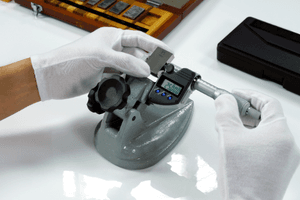
How to Calibrate Your Pipettes to ISO 8655 Standards
Pipette calibration helps laboratories confirm that liquid handling results remain accurate, repeatable, and traceable. This guide explains how pipettes are calibrated to ISO 8655 standards, including gravimetric testing, environmental control, correct tip selection, volume testing, calibration records, and common mistakes to avoid. It also covers when to use in-house calibration and when an external calibration service may be more suitable.
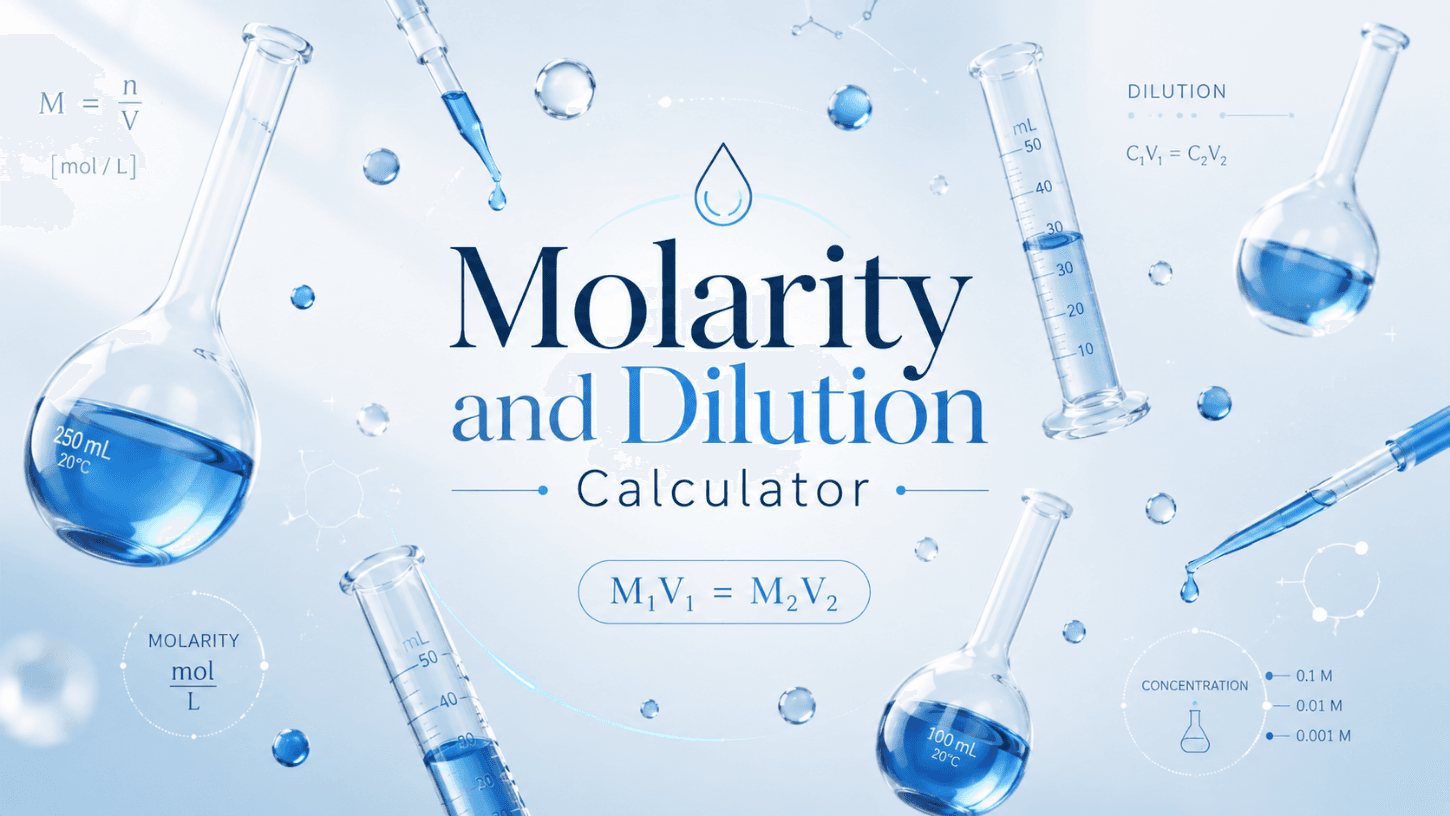
Molarity and Dilution Calculator
A free molarity and dilution calculator covering four essential lab calculations: C1V1=C2V2 dilution (solve for any unknown), molarity from mass, mass from molarity, and serial dilution table generation. Includes worked examples, a concentration units guide and step-by-step preparation instructions for every result.
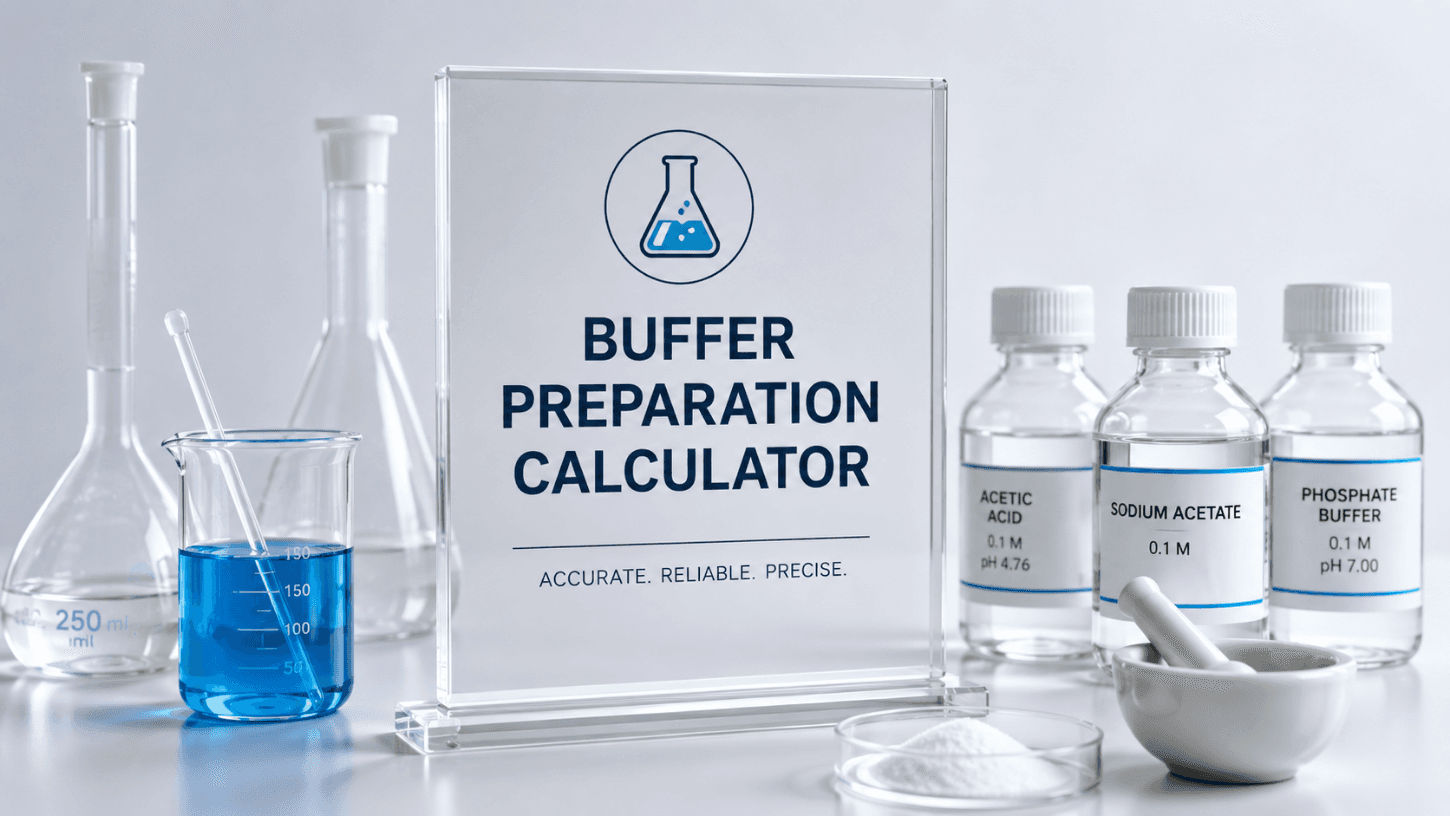
Buffer Preparation Calculator
Free online buffer preparation calculator. Select your buffer system, enter target pH, concentration and volume, and get an exact lab-ready recipe with reagent masses and step-by-step instructions. Covers PBS, Tris-HCl, sodium phosphate, acetate, HEPES, MOPS and more.