Representative Image

LLG Labware LLG-PCR-tubes, 0.2 mL, 8-tube Strip, Transparent PP, Attached Flat Cap, DNA/RNA Free, Pack of 120

Specifications

HS Code #
39269097
Autoclavable
Yes
Colour
Transparent
Material
PP
Nominal capacity
0.2 ml
Pyrogen free
Yes
RNase/ DNase-free
Yes
Type of closure
Attached lid
UNSPSC
41121701
With graduation
No
With labelling field
No

SG $127.86

Inc. GST

Supplier Stock: 40
Estimated shipping time from Germany : 4-6 weeks

Product description

The LLG Labware laboratory tubing is designed for fluid handling in the stated laboratory application. It provides a practical way to complete this task in laboratory, production or quality-control workflows. Its purpose-focused design helps users choose an appropriate product for their method and working environment.

Key Features:

  • Brand: LLG Labware
  • Product Type: Laboratory Tubing
  • Application: Fluid handling in the stated laboratory application
  • Pack Size: 120
  • Capacity: 0.2 mL
  • Material: Polypropylene (PP)
  • Sterilisation: Autoclavable
  • Compatibility: LLG-PCR tubes with flat caps are suitable for standard PCR thermal cyclers
  • Configuration: The uniform, thin tube wall ensures optimum heat transfer and minimises condensation

LLG Labware LLG-PCR-tubes 0.2 mL, 8-tube Strip, Transparent PP, Attached Flat Capacity, DNA/RNA Free, Pack of 120 is a practical choice when laboratory tubing performance must match a clearly defined application. Its stated pack size, capacity and material identify the important selection criteria. Together, these details support consistent handling and dependable use within the stated operating requirements.

More items to explore

LLG-PCR tubes, PP, strips of 8 with seperate cap strips

ProductNominal capacityMaterialMfr#Part#AvailabilityPrice
0.2 mlPP47048994.704 899In stockSG $148.24

Frequently asked questions

LLG Labware LLG-PCR-tubes 0.2 mL, 8-tube Strip, Transparent PP, Attached Flat Capacity, DNA/RNA Free, Pack of 120 is a laboratory Tubing used for fluid handling in the stated laboratory application. It provides the specified product configuration for the stated laboratory, production or equipment-support task. The selected variant should be checked against the intended method or system before use.

Insights

Explore
Cleaning Lab Glassware: Removing Stubborn Residue

7 mins read

Cleaning Lab Glassware: Removing Stubborn Residue

Cleaning laboratory glassware properly is essential for accurate, safe, and repeatable lab work. This guide explains how to remove stubborn residue from beakers, flasks, bottles, volumetric glassware, and other lab glassware, including grease, dried salts, biological residue, stains, and burnt deposits. It also covers safe cleaning methods, common mistakes, drying and storage tips, and when damaged glassware should be replaced.
Read full story
How to Calibrate Your Pipettes to ISO 8655 Standards

7 mins read

How to Calibrate Your Pipettes to ISO 8655 Standards

Pipette calibration helps laboratories confirm that liquid handling results remain accurate, repeatable, and traceable. This guide explains how pipettes are calibrated to ISO 8655 standards, including gravimetric testing, environmental control, correct tip selection, volume testing, calibration records, and common mistakes to avoid. It also covers when to use in-house calibration and when an external calibration service may be more suitable.

Read full story
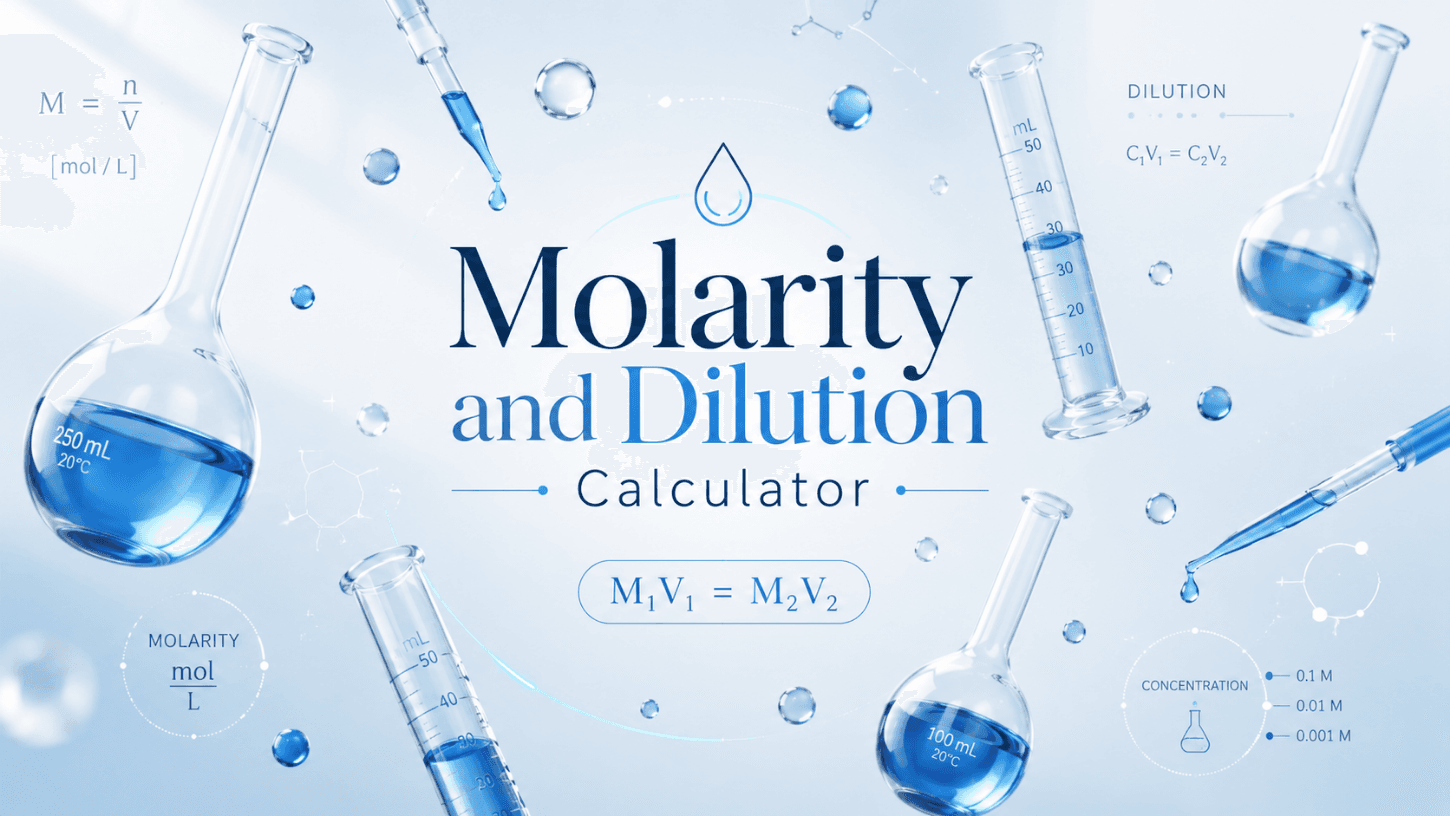
Molarity and Dilution Calculator

9 mins read

Molarity and Dilution Calculator

A free molarity and dilution calculator covering four essential lab calculations: C1V1=C2V2 dilution (solve for any unknown), molarity from mass, mass from molarity, and serial dilution table generation. Includes worked examples, a concentration units guide and step-by-step preparation instructions for every result.

Read full story
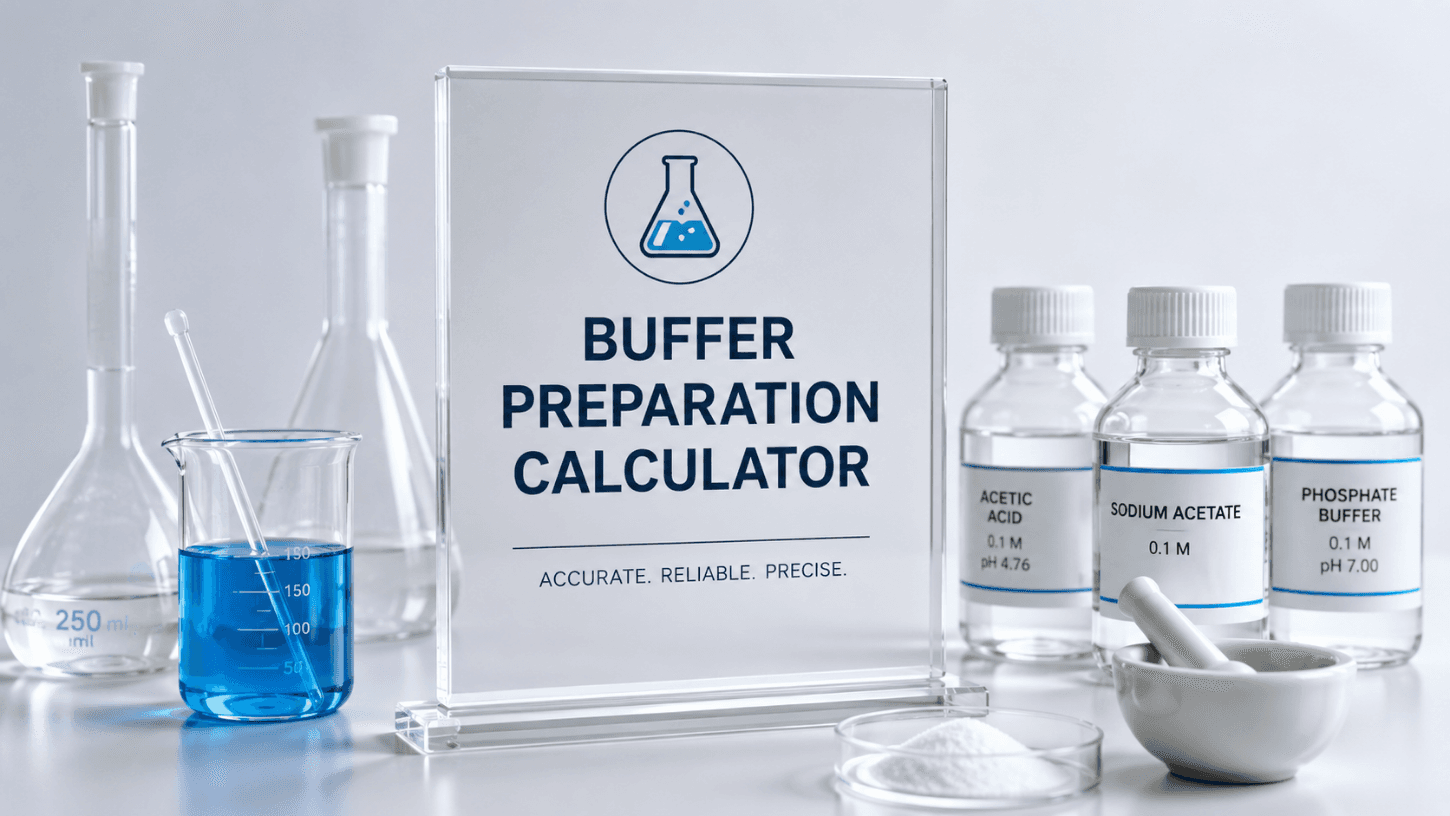
Buffer Preparation Calculator

9 mins read

Buffer Preparation Calculator

Free online buffer preparation calculator. Select your buffer system, enter target pH, concentration and volume, and get an exact lab-ready recipe with reagent masses and step-by-step instructions. Covers PBS, Tris-HCl, sodium phosphate, acetate, HEPES, MOPS and more.

Read full story