The SI Analytics Viscometer Ubbelohde 530 10 is designed for automatic viscosity measurements using capillary No. I. With a constant K = 0.01, this viscometer is ideal for applications where precise viscosity testing is needed. Though it is not calibrated, it provides the necessary functionality for labs conducting automatic measurements and can be calibrated according to the user's specific requirements.
Key Features:
Brand: SI Analytics
Type: Ubbelohde 530 10 for automatic measurement
Capillary: Capillary No. I for accurate fluid measurement
Constant: K = 0.01 for consistent viscosity testing
Calibration: Not calibrated, allows for customized calibration
Application: Ideal for viscosity testing in research and industrial applications
This SI Analytics Viscometer is an essential tool for laboratories requiring flexible viscosity measurement solutions, with the option for calibration based on specific needs.
It is designed for automatic viscosity measurements using capillary No. I. With a constant K = 0.01, this viscometer is ideal for applications where precise viscosity testing is needed. Though it is not calibrated, it provides the necessary functionality for labs conducting automatic measurements and can be calibrated according to the user's specific requirements.
Yes. It is designed for viscosity testing in research and industrial applications, and offers ubbelohde 530 10 for automatic measurement and capillary No. I for accurate fluid measurement to support this kind of work.
It has ubbelohde 530 10 for automatic measurement, capillary No. I for accurate fluid measurement and K = 0.01 for consistent viscosity testing.
It offers not calibrated, allows for customized calibration.
Cleaning laboratory glassware properly is essential for accurate, safe, and repeatable lab work. This guide explains how to remove stubborn residue from beakers, flasks, bottles, volumetric glassware, and other lab glassware, including grease, dried salts, biological residue, stains, and burnt deposits. It also covers safe cleaning methods, common mistakes, drying and storage tips, and when damaged glassware should be replaced.
Pipette calibration helps laboratories confirm that liquid handling results remain accurate, repeatable, and traceable. This guide explains how pipettes are calibrated to ISO 8655 standards, including gravimetric testing, environmental control, correct tip selection, volume testing, calibration records, and common mistakes to avoid. It also covers when to use in-house calibration and when an external calibration service may be more suitable.
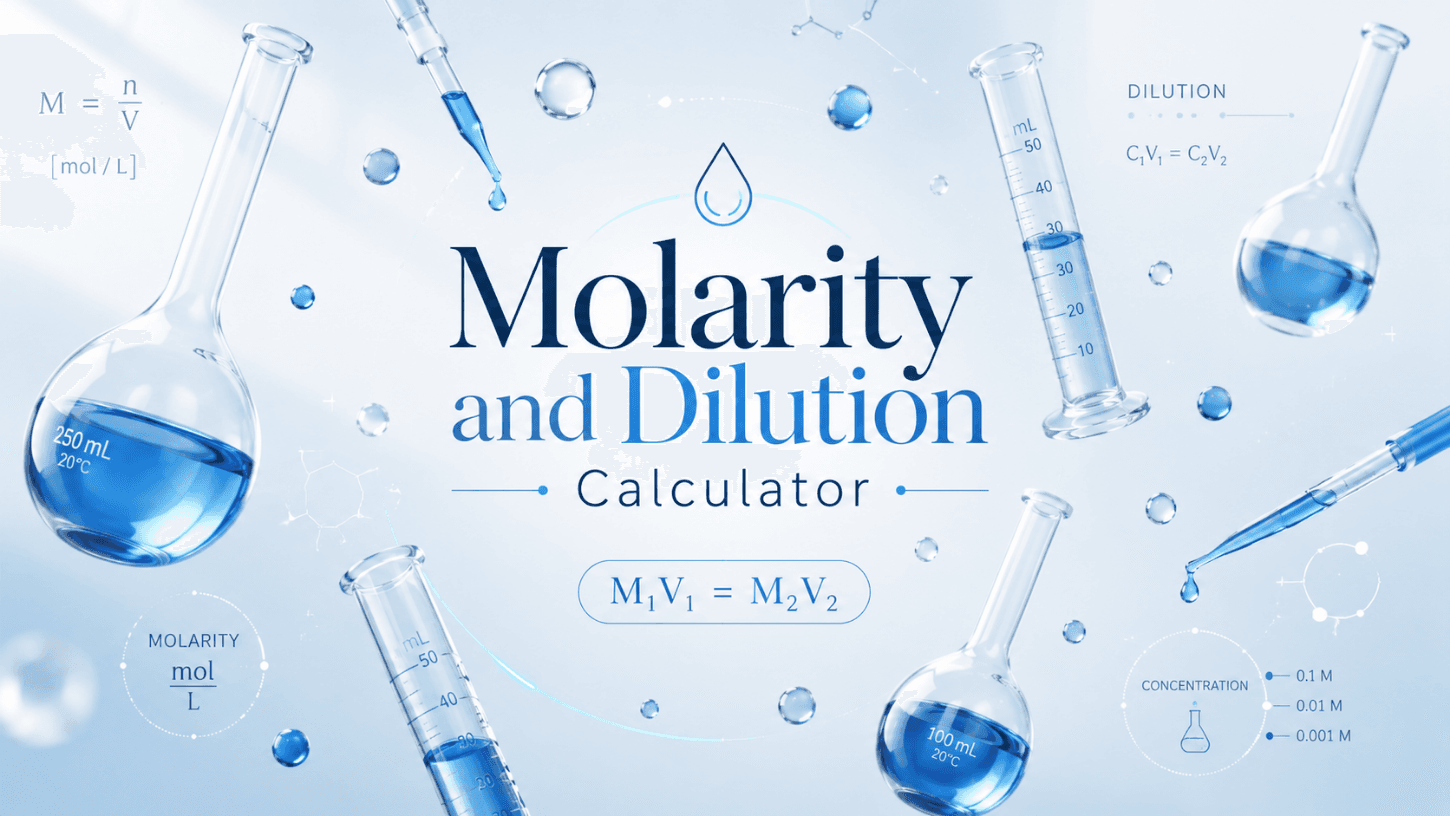
A free molarity and dilution calculator covering four essential lab calculations: C1V1=C2V2 dilution (solve for any unknown), molarity from mass, mass from molarity, and serial dilution table generation. Includes worked examples, a concentration units guide and step-by-step preparation instructions for every result.
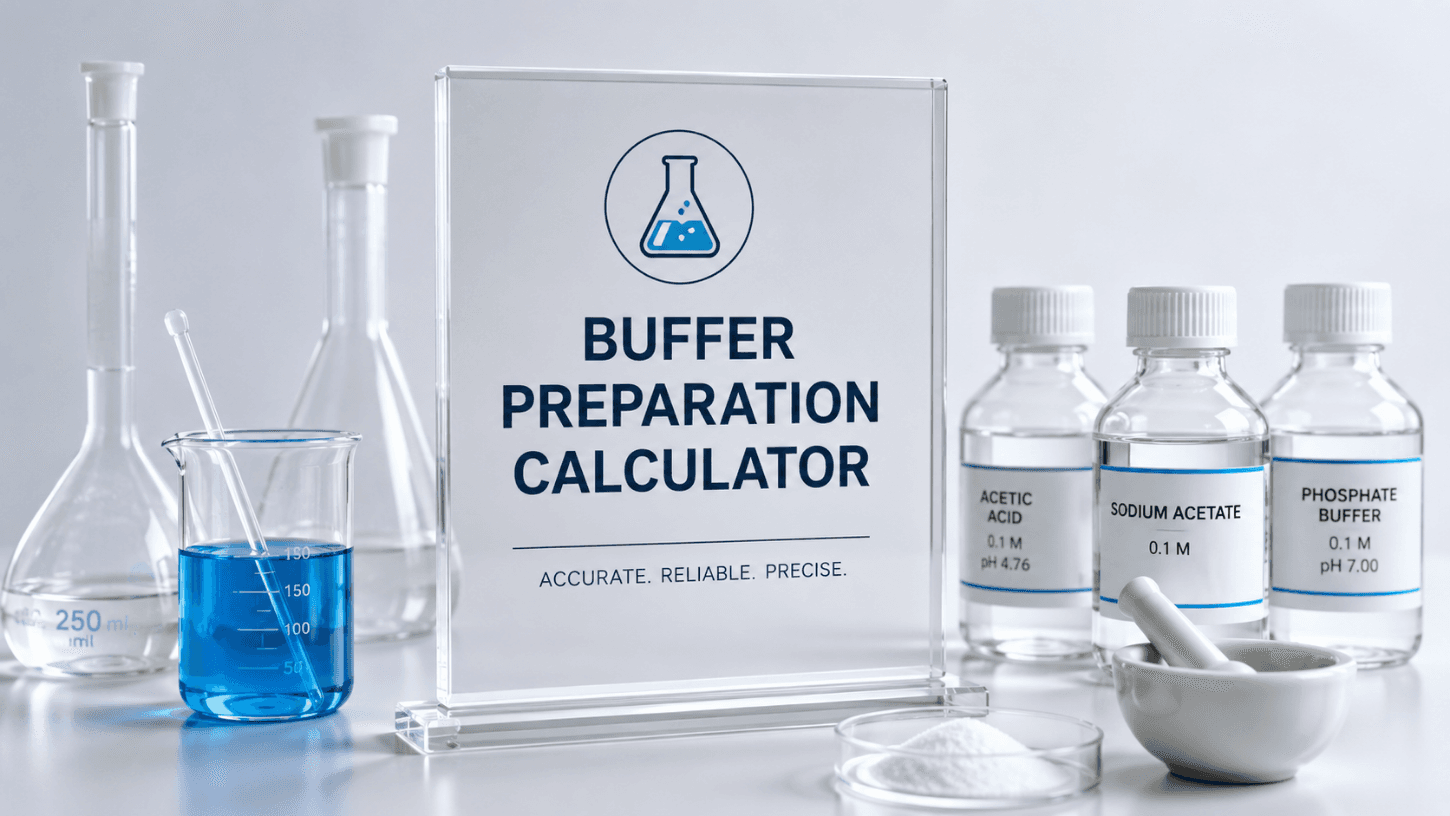
Free online buffer preparation calculator. Select your buffer system, enter target pH, concentration and volume, and get an exact lab-ready recipe with reagent masses and step-by-step instructions. Covers PBS, Tris-HCl, sodium phosphate, acetate, HEPES, MOPS and more.
Laboratory balances are essential weighing instruments used to measure samples, reagents, powders, chemicals and materials with accuracy and consistency. They are commonly used in research, education, quality control, pharmaceutical testing, food testing, industrial laboratories and general scientific workflows.