Showing 16481 - 16512 of 52189 results

Colour discs 3/126 hydrazine
Available soon
Part9.947 032
•
Beaker 50ml, PP graduated, low form autoclavable
Available soon
Colour discs 3/117 iron
Available soon
Part9.947 035
•
Colour discs 3/103 nitrite
Available soon
Part9.947 039
•
Colour discs, 3/2ARP chlorine
Available soon
Part9.947 019
•
Colour discs 3/116 iron
Available soon
Part9.947 034
•
ASPUREP Clean Paper SPA4 blue, pack of 10x250 sheets
Available soon
Colour discs 3/70 phosphate
Available soon
Part9.947 044
•
pH electrodes,with 3 m cable Sentix 21-3
Available soon
Colour discs NDPC chlorine
Available soon
Part9.947 022
•
Colour discs 3/40ED chlorine dioxide
Available soon
Part9.947 026
•
Colour discs NOL iron
Available soon
Part9.947 036
•
Continuous bottle-top burette, 25 ml, type E
Available soon
Part9.284 020
•
Permanent marker Edding 400 brown, line width 1 mm
Available soon
"Solarus" digital burettes 50ml
Available soon
Part9.287 781
•
"Solarus" digital burettes 10ml
Available soon
Part9.287 779
•
Seals for Tranferpettor pack of 3
Available soon
PE-Seals for Tranferpettor pack of 10
Available soon
Seals for Tranferpettor pack of 3
Available soon
Seals for Tranferpettor pack of 3
Available soon
PE-Seals for Tranferpettor pack of 10
Available soon
*after clearance sale no longer available thr.LLG* LLG-Laboratory funnel Ø 120 mm PP, with rib, pack of 10
Available soon
Calibration standard reference filter 667-UV9 n-hexane
Available soon

Insights

Explore
Cleaning Lab Glassware: Removing Stubborn Residue

7 mins read

Cleaning Lab Glassware: Removing Stubborn Residue

Cleaning laboratory glassware properly is essential for accurate, safe, and repeatable lab work. This guide explains how to remove stubborn residue from beakers, flasks, bottles, volumetric glassware, and other lab glassware, including grease, dried salts, biological residue, stains, and burnt deposits. It also covers safe cleaning methods, common mistakes, drying and storage tips, and when damaged glassware should be replaced.
Read full story
How to Calibrate Your Pipettes to ISO 8655 Standards

7 mins read

How to Calibrate Your Pipettes to ISO 8655 Standards

Pipette calibration helps laboratories confirm that liquid handling results remain accurate, repeatable, and traceable. This guide explains how pipettes are calibrated to ISO 8655 standards, including gravimetric testing, environmental control, correct tip selection, volume testing, calibration records, and common mistakes to avoid. It also covers when to use in-house calibration and when an external calibration service may be more suitable.

Read full story
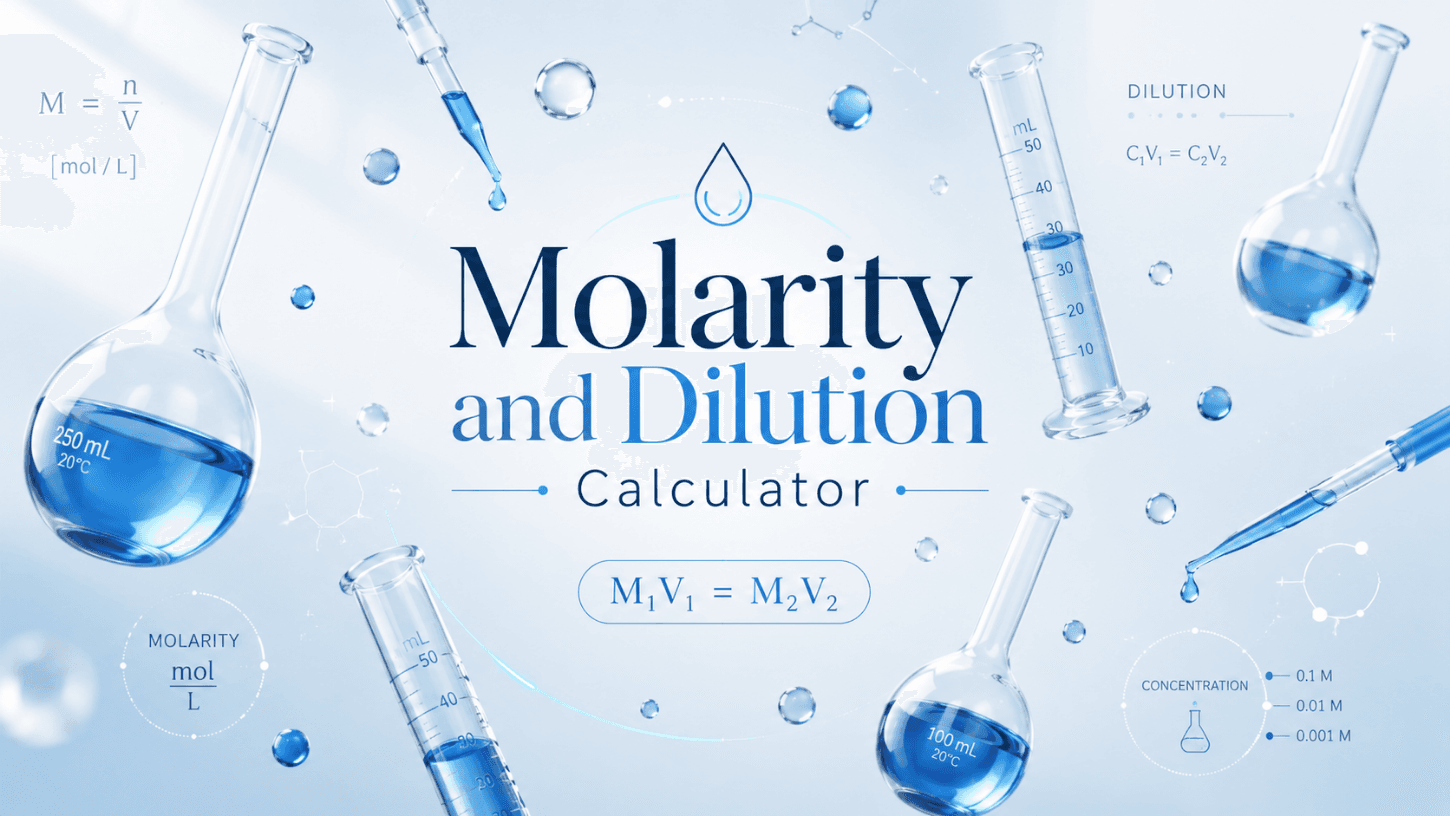
Molarity and Dilution Calculator

9 mins read

Molarity and Dilution Calculator

A free molarity and dilution calculator covering four essential lab calculations: C1V1=C2V2 dilution (solve for any unknown), molarity from mass, mass from molarity, and serial dilution table generation. Includes worked examples, a concentration units guide and step-by-step preparation instructions for every result.

Read full story
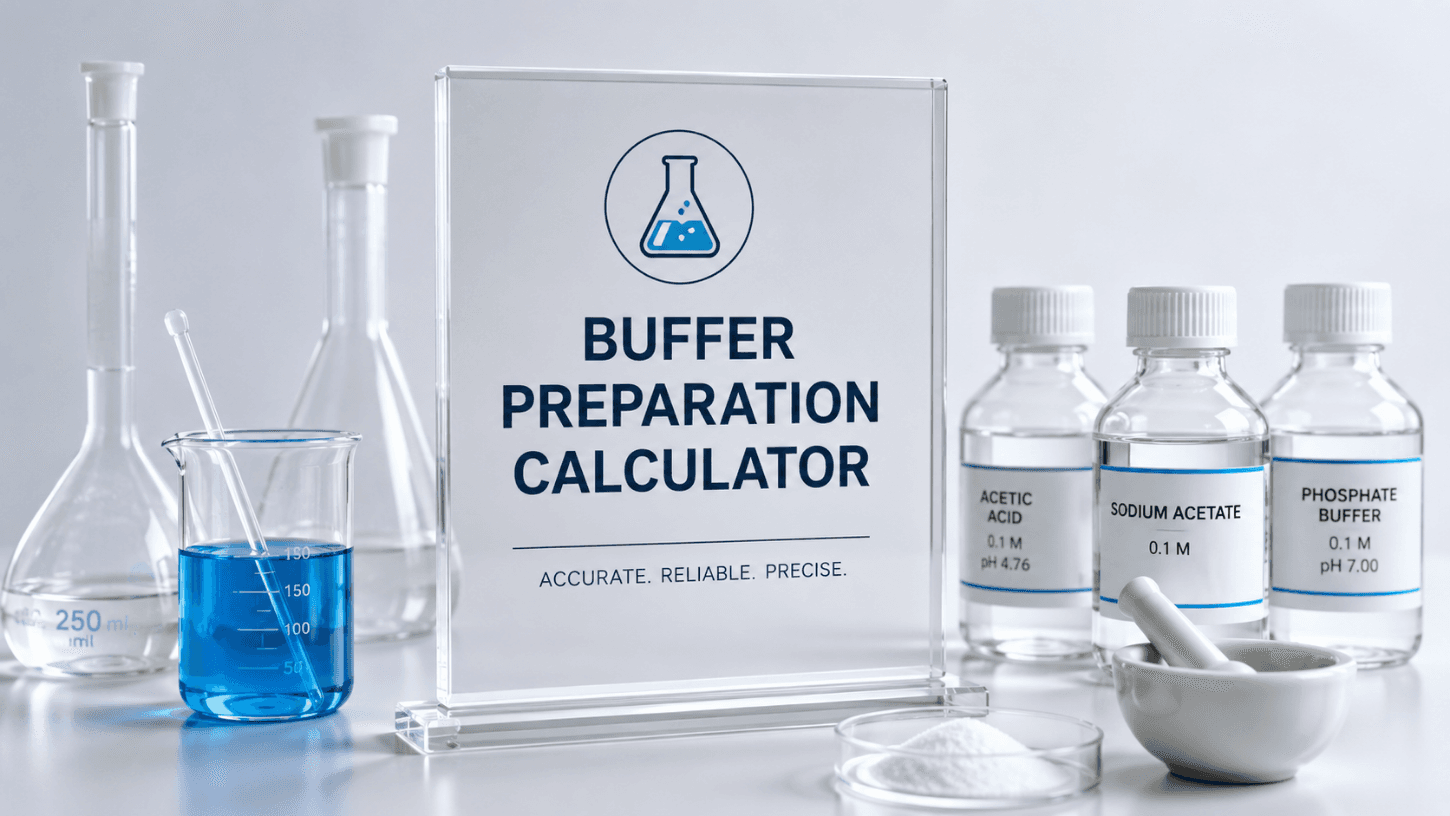
Buffer Preparation Calculator

9 mins read

Buffer Preparation Calculator

Free online buffer preparation calculator. Select your buffer system, enter target pH, concentration and volume, and get an exact lab-ready recipe with reagent masses and step-by-step instructions. Covers PBS, Tris-HCl, sodium phosphate, acetate, HEPES, MOPS and more.

Read full story